
Your company, better step by step.
Each step priced before it starts. You decide if it's worth it.
Small steps you can judge.
A company gets better the way it was built: one good decision at a time.
For companies whose work runs on retyping, spreadsheets and systems that don't talk to each other.
So we work in steps. Each one is small enough to see clearly, priced before it starts, and useful on its own. When it is done, it is paid for, it works, and it is yours. Then you decide on the next one.
You know your numbers. We tell you the price and what changes. You judge whether it's worth it.
One rhythm, step after step.
Every step follows the same five beats. Then the next one begins.
We look at where you are.
How the work runs today, in your words and your people's.
We propose the next step.
What it is, what changes, how long it takes, and its price.
You decide.
Yes, later or no. It is your call, every time.
You decideWe do it.
Together with your people, alongside the daily work.
You see the difference.
In daily work. Then we propose the next step.
The part we build and keep running
Every step, on one page.
Before anything starts, you get one page. It holds everything you decide on.
SampleAn invented example
Proposed next step
- What it is
- Connect the order inbox to the system you already use.
- What changes
- Each order is entered once. Your team answers customers sooner.
- Who from your side
- The two people who handle orders.
- How long
- A few weeks, agreed in the proposal.
- Price
- € · agreed up front
- Yes
- Later
- No
Later is a good answer too. The proposal will wait.
What a step can be.
Some steps are a conversation. Some are a report. Some are a new part of your system.
A workshop
Time with your people, and a clear picture of what to do first.
A business analysis
A written map of how the work runs, and what to change in which order.
Check-up
technical due diligenceA plain verdict on a system or a team before you invest in it.
A prototype
A working first version on a sample of your data, under NDA.
Setting up what you have
The system you already pay for, configured to fit how you work.
Connecting your systems
Data typed once, and it shows up everywhere it is needed.
A report or dashboard
The numbers you check every week, in one place, always current.
A custom part
Made for the way you work, and fitted to what you already run.
Training your team
Your people confident with the new tools, and with AI in their daily work.
Looking after it
We keep it running and improving, on terms agreed up front, if you want it.
Every step has its price before it starts.
The first step.
Small jobs start with a fixed-price first part. Bigger jobs start with a paid analysis.
- Size
- One stepWritten down, so everyone knows what is in it.
- Price
- Agreed up frontFor a bigger job, the paid analysis costs a few thousand euros.
- Time
- About six weeksTo first real use. The pace follows how quickly your people can decide.
The first conversation is free.
How preparing a quote went from half a day to about 15 minutes
The people who do the work.
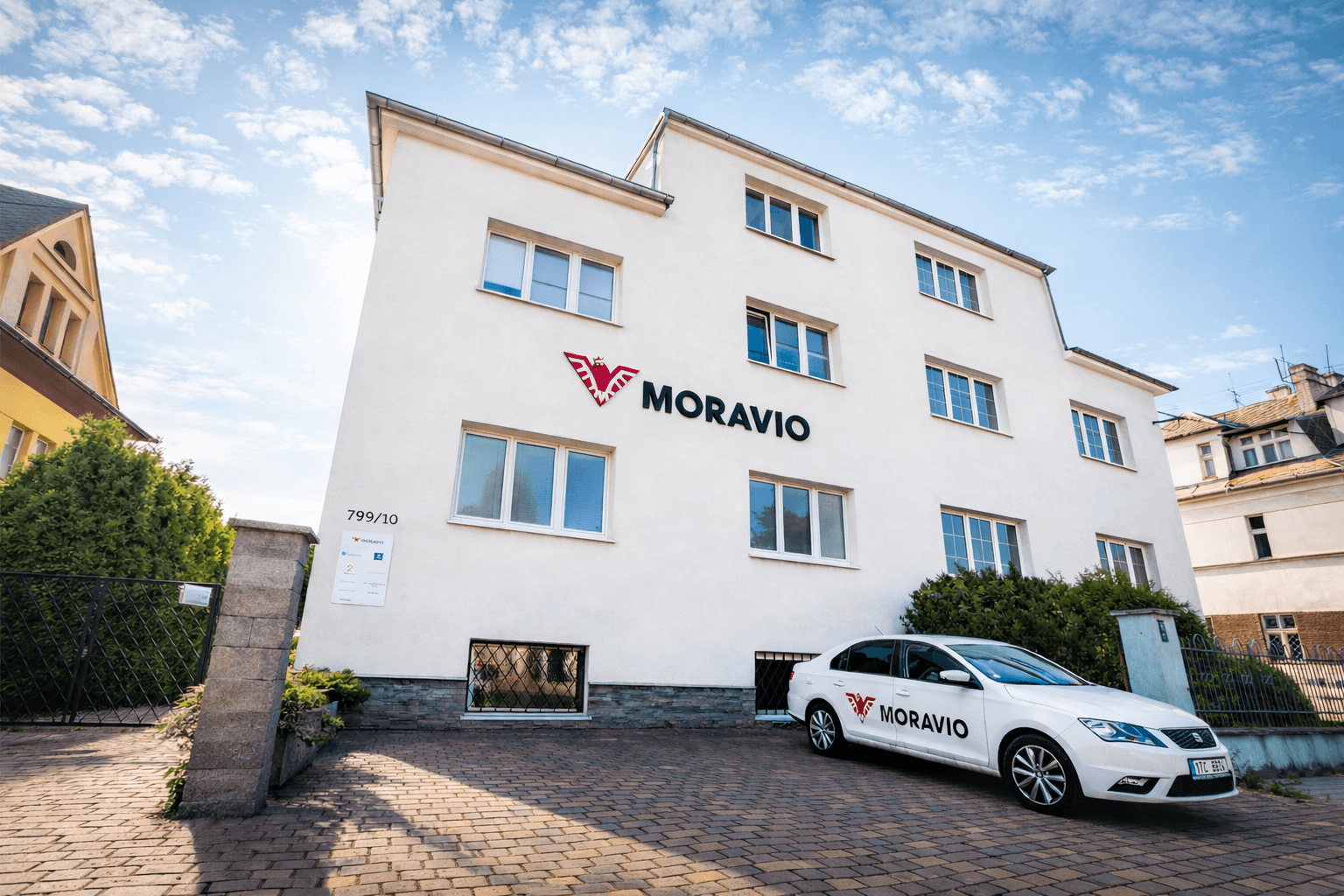
You talk directly to the people who run the workshop, write the analysis and build the software. They show you each new version as it takes shape.




What we need from your people
- The people who do the work every day.
- Short, regular sessions.
- Mostly remote, on site when it helps.
After launch, you choose.
Everything after launch is optional: support, monitoring and further work.
No per-seat bill, no meter: you pay for the steps you choose, and any running costs, such as hosting, are named in each proposal.
Or your own team takes it over. The handover pack is made for that.
- Offices
- Prague · Ostrava · Barcelona
- Time zone
- CET
For your IT team.
Three things your IT team will want to know.
- It is yours. Your data is always yours. The code and the IP become yours exclusively as soon as the work is paid for. The framework contract says so.
- It comes with a handover pack. Source code, setup, operating guide, architecture note, outside services.
- They talk to the builders. Your IT team works directly with the people who do the work.
Tell us what slows you down.
Describe the situation. We reply with a proposed first step and its price.
Prefer e-mail? jakub.bily@moravio.com · Or book a call